"Give me your slowest approach speed.”
If you’ve flown into KMLB (Melbourne Orlando International Airport), you’ve probably heard that call, maybe more than once on the same flight.
I’ve been lucky to fly in different parts of the country, from the busy skies around LA to the Northeast corridor, and each area brings its own challenges: terrain, weather, unique local procedures, or busy Class B airspace. Still, some of my most valuable IFR lessons have come from my current home airport.
KMLB doesn’t have tough terrain or complicated instrument procedures. What it does have is a busy training environment that keeps pilots on their toes. Flying here taught me that managing workload isn’t just about flying the right altitudes and headings. It’s about finding the information you need quickly, thinking ahead, and staying ready for surprises.
A busy airport makes for great training
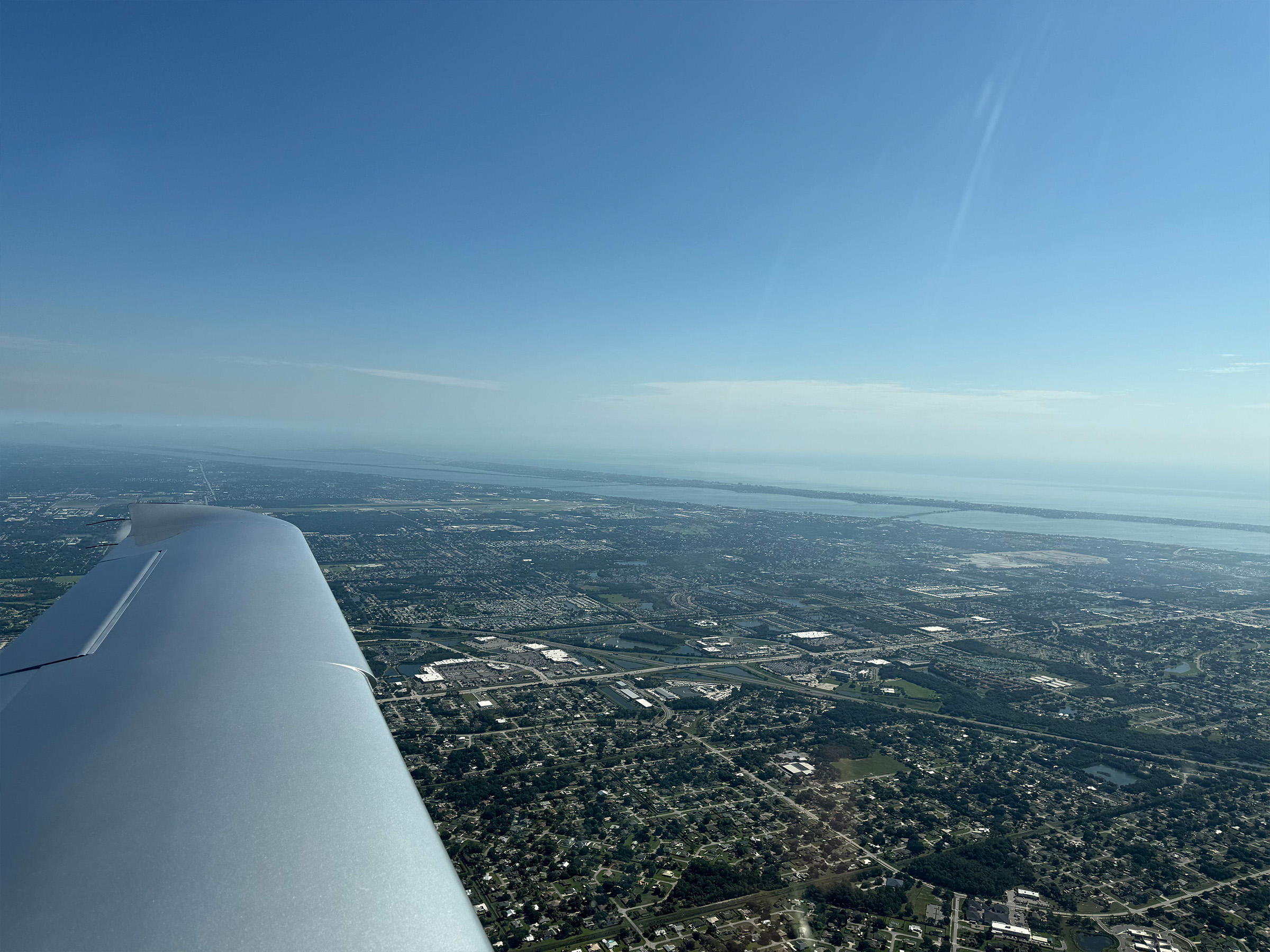
From a technical standpoint, flying in and around KMLB isn’t especially hard. The approaches are well designed, the terrain isn’t a factor, and Florida’s weather usually cooperates, especially during the morning flight blocks.
The real challenge is everything happening around you.
Florida’s Space Coast is home to many flight schools and college aviation programs, which means a steady flow of training aircraft. On any given day, you’ll hear students flying just about every approach the airport has to offer, practicing missed approaches, working through holds, or moving between airports. Add business jets, military flights, and airliners, and the radio gets very busy.
Melbourne’s local controllers and Orlando TRACON do a great job keeping everyone moving and separated, but that doesn’t take away the need for pilots to stay alert.
When the approach doesn’t go as published
Approaches into KMLB don’t always go the way the chart says. Sometimes, ATC gives you an alternate missed approach. It’s not uncommon for ATC to instruct you to break off an approach two miles from the airport and make an unexpected turn. I’ve even been told to stop my descent at 1,500 feet, a restriction the controller quickly realized didn’t leave much room for an approach and amended. When Florida’s afternoon storms roll in, speed restrictions are added, and with many training aircraft returning at once, “give me your slowest approach speed” becomes routine.
None of these requests are hard on their own. But when they stack up, they make this part of the flight much more demanding.
Over the Atlantic
KMLB has one more quirk worth mentioning.
The full RNAV approaches to Runways 27L and 27R often mean flying for a bit over the Atlantic. The approach isn’t hard by any means, but it feels a little unsettling to spend several minutes over open water, especially knowing the shark bite capital of the world is just up the coast.
Luckily, it’s more of a mental distraction than a real flying challenge. Still, it’s one of those Florida experiences that sticks with you long after the flight.
The right information at the right time
During one of my training flights, I realized the airplane wasn’t the hardest part of the approach. It was managing everything else.
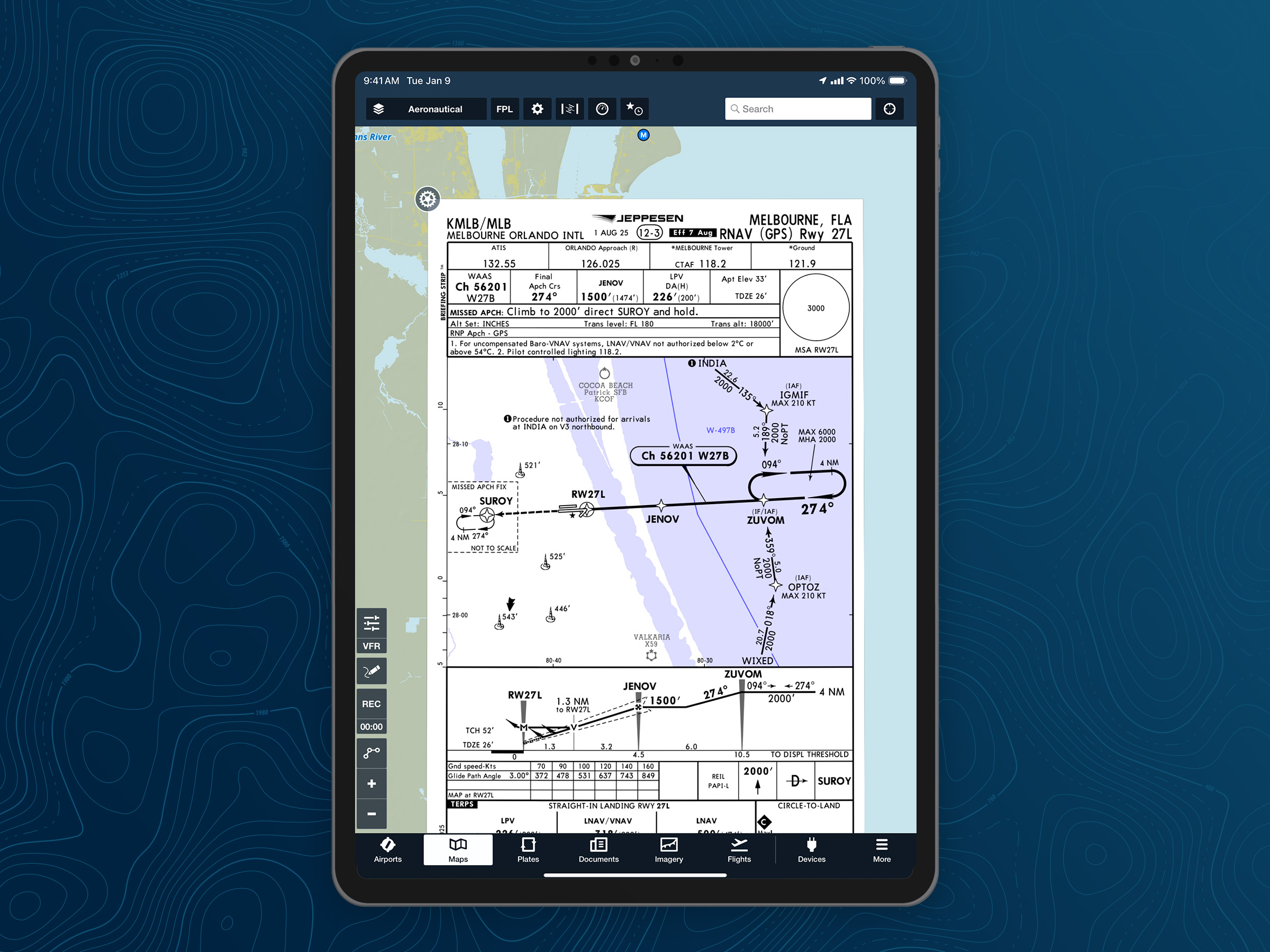
That’s when I started to really appreciate Jeppesen charts. I didn’t need more information, just the right information at the right time. The way Jeppesen organizes information on its charts and diagrams makes it easier to find what I need and act on it.
As clearances changed and ATC updated the sequence, I kept returning to the approach chart. Not because I didn’t know the procedure, but because I wanted to quickly confirm frequencies, minimums, and published missed approach instructions without spending too much time looking down.
Jeppesen and FAA charts contain much of the same information, but the layout makes a difference for me. Minimums, frequencies, notes, and missed approach details are all in logical places. My eyes know right where to look so I can get back to flying.
Those few seconds matter. Every second you spend searching a plate is a second you’re not scanning the instruments or planning ahead. As a student, cutting down on that head-down time helped me stay ahead of the airplane. Even now, as a newly instrument-rated pilot, I still value this on every flight.
My biggest takeaway
Passing my instrument checkride wasn’t the moment IFR flying became comfortable for me. That moment came earlier, when I stopped seeing the approach chart as just something to review before the approach and started using it as a real tool to manage my workload.
Every airport teaches you something new. Some places have mountains or fast-changing weather, others demand careful planning for crowded airspace. KMLB taught me that staying ahead of the airplane isn’t just about flying skills. It’s also about how quickly you can find and process the information you need.
Before every approach, I run through a mental flow: I review the approach plate and note the most critical items, including the final approach course, MDA or DA, missed approach point, and the lighting I can expect. I’ll even say them out loud or highlight them on the plate or map. That way, when ATC calls or things get busy, I already know exactly where to look or what frequency to dial in. A set routine for gathering and confirming information makes it much easier to adapt when things change quickly.
It’s the biggest lesson I took from instrument training, and one I’ll carry with me wherever I fly next.