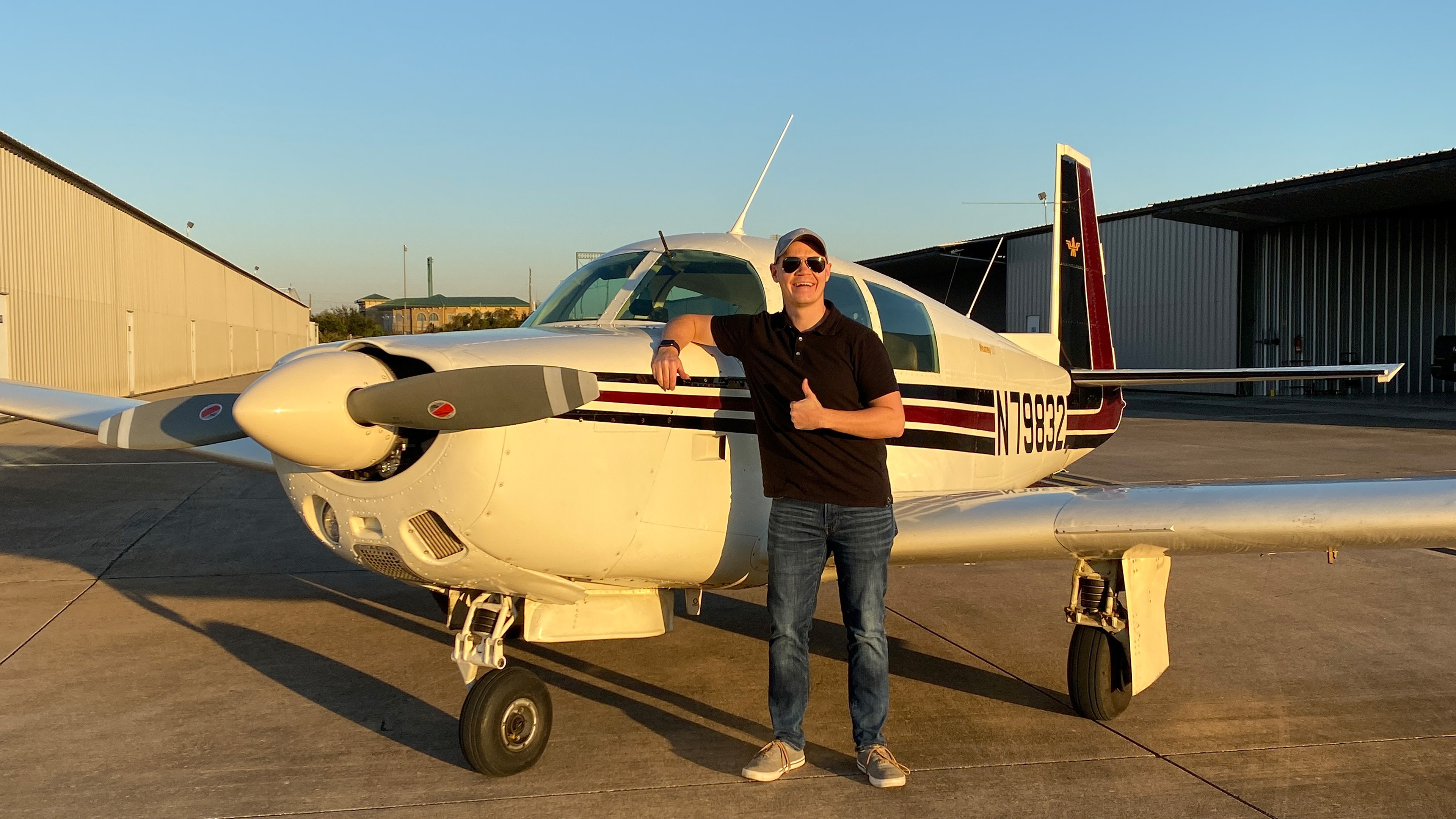
Owning an airplane can be an amazing and rewarding experience for any pilot. However, buying a plane is not as simple as buying a car, and pilots considering aircraft ownership often ask me what to expect and what to plan for. I’ve owned 3 airplanes, so I thought I’d put together a high-level guide on my approach to buying an airplane to help others who may want to go down that path.

Owning vs. renting
Ask a dozen pilots, and you’ll get a dozen answers. Is renting cheaper? Is buying better? Can you make owning cheaper than renting?
First, take a look at how often you are flying. When you own, it doesn’t matter if you fly 10 hours or 500 hours a year – the fixed costs are the same. If you don’t fly often, the per-hour costs of owning can be WAY higher than renting. The reverse can also be true. If you fly 500 hours a year, but have relatively low maintenance costs, you could be saving thousands owning vs. renting. In general, you need to fly at least 100 hours a year in your plane for owning to stand a chance at being cheaper than renting.
Pros and cons of owning vs. renting
Another ownership option
If you’re on the fence financially about owning, another option to consider is getting a co-owner. It splits your costs in half, and while there are downsides (like the plane not always being available when you want it, or having to make decisions with another person), it may make owning much more affordable. Which brings us to…
Equity partnerships
Equity Partnerships are arrangements where you co-own an airplane, and all expenses, including the acquisition cost, are split evenly among the partners. They can work on a 1-airplane partnership model or as an equity club, also known as the flying club model. Equity partnerships can be a great introduction to airplane ownership as you mitigate a lot of the financial risk while still getting a front-row seat to what owning an airplane is really like.
Forming an equity partnership
Equity partnerships can include up to four members. Once you get above four owners, it’s usually considered a flying club, especially in the eyes of a bank that you might obtain financing through. It’s common for equity partnerships to be built as LLCs with each member having an ownership stake in the LLC, and the plane is owned and operated as an asset by the LLC.
You can form an equity partnership by buying an airplane together or by joining an existing partnership where somebody sells their share. Either way, you become a co-owner of the plane.

Setting up a strong partnership agreement
Keep in mind that partnerships on planes are like having roommates. You want to upgrade the avionics, but another partner doesn’t. How does that work? Or you’re always keeping all the databases up-to-date, handling and coordinating maintenance, and regularly cleaning the plane, but you feel the other partners (who pay the same as you) aren’t contributing. Do you address it?
The key to handling those situations is having a really solid partnership agreement.
Spell out how you’re going to handle certain situations. One way I’ve seen it done for upgrades, as an example, is 1. if it adds value to the plane, 2. does not negatively affect the flying experience, and 3. is under $1000, the upgrade can be done by majority vote, without needing unanimous approval.
That could look like if 3/4 members want to put an LED landing light in (around $600), the 4th member would have to pay their fair share, even if they voted against it. However, if it were a major upgrade, like installing a new avionics panel, the vote would need to be unanimous. Since it’s an equity club, anything that adds value to the plane adds value for all the owners, which is why it can be tough to agree.
Other things a partnership agreement should spell out:
- Who’s paying the bills, and how does that person get the money to pay those bills?
- It’s common to create a bank account just for the LLC and have everything billed to that account, with members regularly transferring their shares into the account.
- Who owns what?
- Accounting (making sure each member is paying into the account), maintenance, insurance, cleaning, database updates, etc., all need people in charge.
- How are variable costs (maintenance, hangar tools, hangar drinks, etc.) handled?
- For example, an agreement that a quote for any non-routine maintenance needs to be generated and agreed upon by all owners before going into work.
- How do we handle upgrades?
- What does the process look like for an owner to sell their share?
- Usually, the other owners get the first right to buy out that share and downsize the partnership.
Pros and cons of partnering

There’s no universal right answer when deciding between renting, buying, or partnering - after all, these are my personal pros and cons, and every pilot’s situation is different. It’s important to be honest with yourself about the type of flying you do, how often you do it, and how much money you can realistically put towards it. Whichever route you choose, you’ll still end up in the air doing what you love – and that’s what it’s all about, right?
If you do end up weighing your options between renting, buying, and partnering, and you want to go the owning route, great choice! However, before you’re up until midnight on Trade-A-Plane, there is more to finding the right aircraft than loving the idea of it. I walk through the importance of defining your mission and your budget so you can get one step closer to getting your own keys in my next installment here.